Blogs and Case Studies

Welcome to the Lively Minds Blogs & Case Studies Page

Blogs
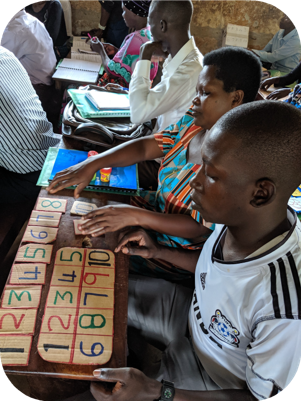
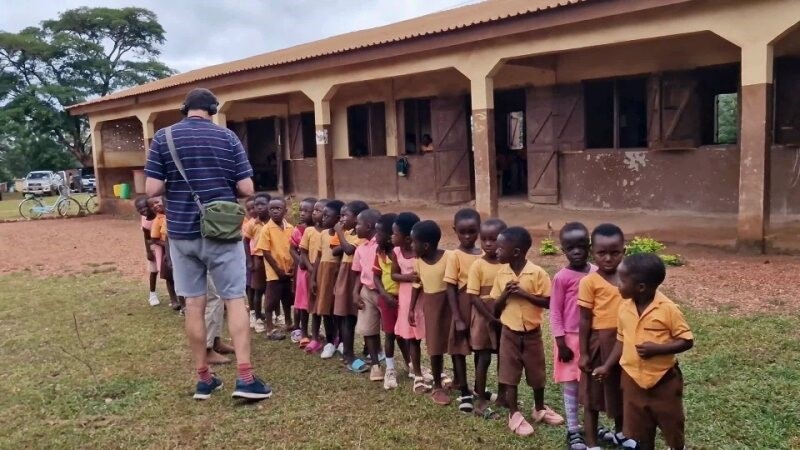

Lively Minds mentoring an ECDAN fellow
To achieve the true impact needed to enable the meaningful change needed to benefit the life opportunities of millions of children worldwide, partnerships are essential. Lively Minds is proud to be a member of the Early Childhood Development Action Network (ECDAN), who in their own words ‘have built an interconnected web of stakeholders committed to prioritizing young children and their caregivers’ to help increase ‘political will and public demand for investments in the early years’. We have collaborated with ECDAN on a range of projects and are always delighted to do so.
When ECDAN asked Eleanor Sykes, our Advocacy Lead in March 2025 if she would be able to mentor one of their fellows, we were keen to help. The ECDAN Knowledge Fellows Programme recruits young professionals to work on an advocacy brief focused on a relevant early childhood area. In fact, Lively Minds’ own Mubarik Abdul-Rahman, Governor and Stakeholder Coordinator, was a fellow in 2023, building a repository of system thinking approaches, methodologies, and tools that may be used to achieve ECD outcomes at scale. Read his report here.
The mentorship process involved regular meetings between mentors and fellows to support their project by providing ongoing feedback, facilitating expert connections, and answering questions.
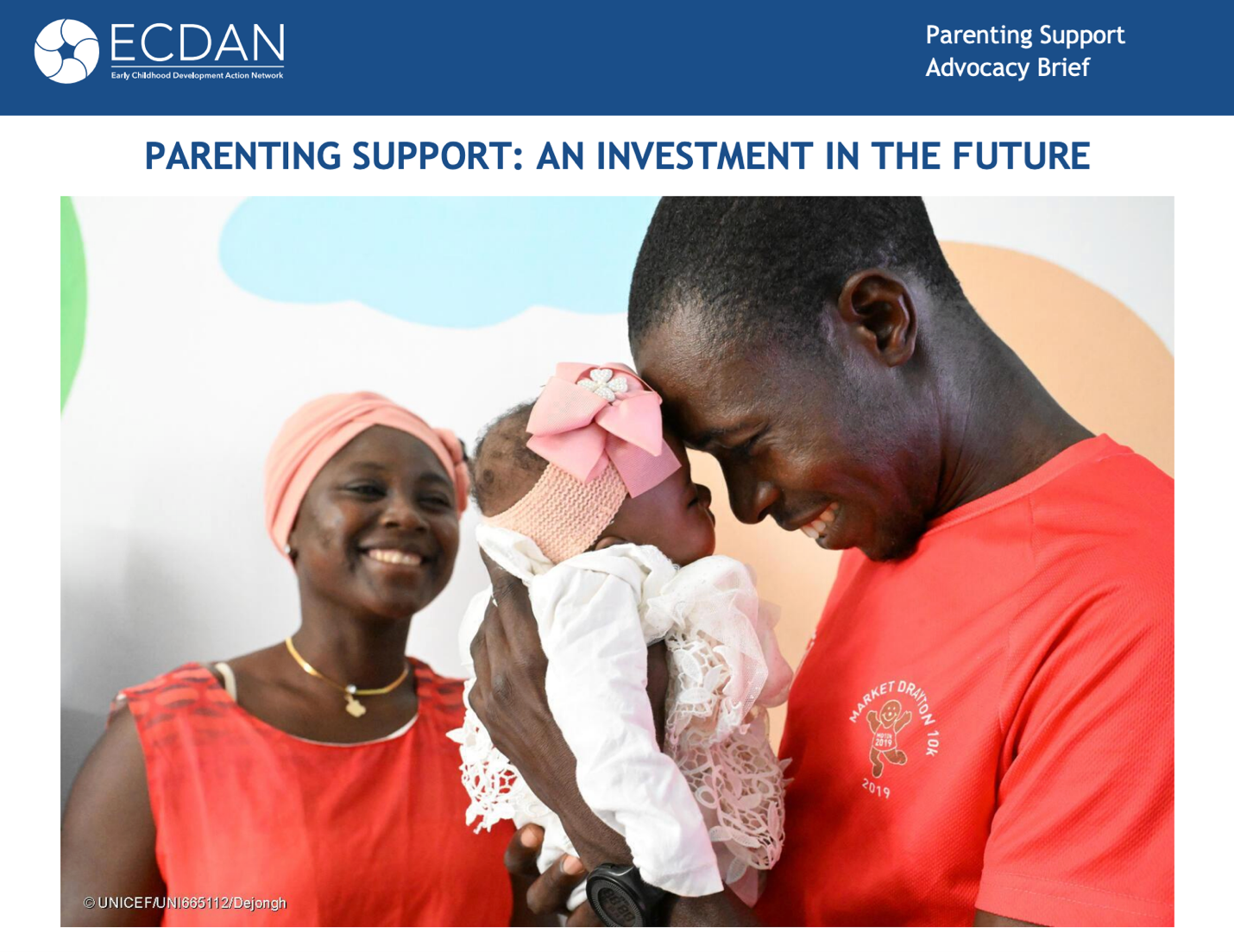
Eleanor was paired with Aishwarya Iyer, a Harvard Masters graduate and research assistant based in India, who was tasked with the following project, to develop a policy brief on parenting support.
Project description: Collaborate with the Global Initiative to Support Parents to write an advocacy brief that explains the why and how of parenting support, provides promising examples from different country contexts, and recommends policy and investments choices to increase support for parents.
Target Audience: National policymakers and parenting advocates
From the start, Aishwarya ensured the process was organised, timetabled and productive. She came to the first meeting with a clear workplan which was a great relief to Eleanor! While Eleanor has considerable experience as an early years teacher and Lively Minds has significant expertise in activating parents to provide better quality early childhood care and education at home, both mentor and fellow learned a great deal from each other.
Aishwarya identified several global organisations that have achieved profound impact through their parenting support programmes. Drawing on these examples, along with extensive evidence and research, she developed a persuasive advocacy brief urging policymakers to prioritise investment in parenting support programmes. Lively Minds was pleased to be one of the organisations highlighted in the brief, for its innovative programme in Ghana and Uganda that activates rural parents to provide quality ECD for their children and power extraordinary learning gains equivalent to an extra year in pre-school.
Please read Aishwarya’s policy brief here and her presentation here.
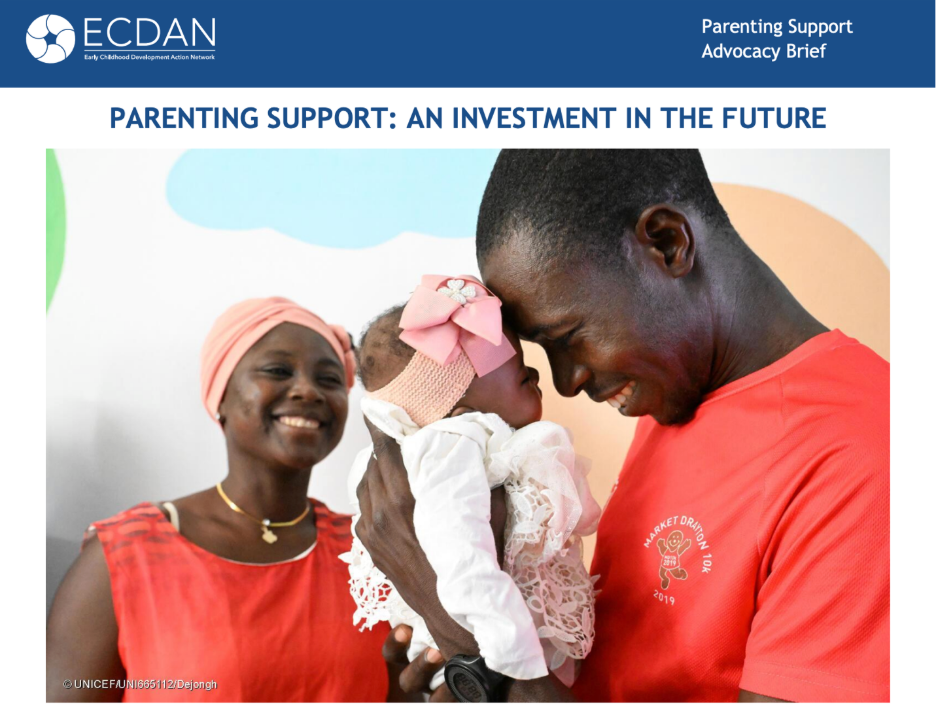
Aishwarya presented the advocacy brief during an ECDAN webinar in November, alongside her other ECDAN fellows, whose briefs covered the topics below. Finally, all the briefs were presented at the inaugural Global Caregivers Conference in January 2026 in Madrid.
Karin Noskova: Project Output: A database of literature that presents an analysis of investments in young children made in one or more country contexts AND an accompanying advocacy brief that summarises lessons learned from the available literature and draws recommendations for strengthening financing for young children at the country level.
Sadaf Qayyam: Project Output: An advocacy brief that includes key messages and specific recommendations that link early childhood to the climate agenda to inspire countries to become champions for young children by taking action in their national climate action policies, plans, and financing decisions.
Wamweru Muthara: Project Output: An advocacy brief that can be used by advocates in different countries in the global majority to support their national efforts to strengthen childcare systems, with key evidence of the benefits, policy recommendations, and potential financing mechanisms drawn from promising practices in countries.
Lively Minds would like to thank Emily Gilkinson for her time and support to both Aishwarya and Eleanor during the mentorship process. And of course, thank you to Aishwarya for being such an open, diligent and highly productive fellow!
Published November 2025
Can you really change generations through the radio?
The Lively Minds Together radio programme has shown that radio can change lives.
Before we explore how that’s made possible, let us first take you on a journey to Northern Ghana.
In a rural village in Northern Ghana, lives Musah. He’s a young farmer, and father to three children.
At the end of a long day in the fields, he gets home. One of his children, Ayisha, who’s 5 years old, is restless, and starts to annoy her sister. Normally, the response would be discipline.
But this time, he remembers what he heard on the radio. He takes a few deep breaths, composes himself, and proposes a game. He finds 5 small objects from around the house and sets up a memory game that he heard last week.
His daughter, Ayisha wins the game. She laughs, and challenges her dad to make it harder. Musah laughs too. They play again with 6, and then 7 objects as she gets better and better.
For the first time, Musah sees himself connecting with his child. And Ayisha discovers that learning can be fun. And that’s all thanks to a radio show.
What is Lively Minds Together?
The radio show we are referring to is Lively Minds Together (LMT). LMT is a programme for parents, run by the NGO Lively Minds. It’s broadcast in 24 languages in Ghana and one in Uganda.
Lively Minds Together has two types of episode that alternate:
1 - Parenting:
Parenting episodes include topics that directly relate to ECCE such as early learning, child health, hygiene, malaria prevention, nutrition, and safety that support the environment in which children are growing up – for example parents’ wellbeing, self-esteem, and life skills.
2 - Play:
Play is crucial for children’s development. Play episodes share simple, cost-free games that help to increase cognitive development, motor skills, language etc.
Lively Minds Together is an example of how radio can change lives. It provides solid proof that behaviour change at scale is possible through the radio.
How can behaviour change be delivered through the radio?
But how do we change behaviour through a radio show?
Like any good behaviour change programme, it’s based on a deep understanding of the audience, their values and priorities and their day to day lives. A behaviour change analysis tool - not dissimilar from models like EAST or COM-B - is used to design each episode and shape its key message.
We know, for example, that many rural parents in Ghana and Uganda face mindset barriers when it comes to raising children. Some feel they don’t have the time, money, and/or that a lack of formal education prevents them from educating their own children. The programme is designed with those realities in mind, and works to bust those myths.
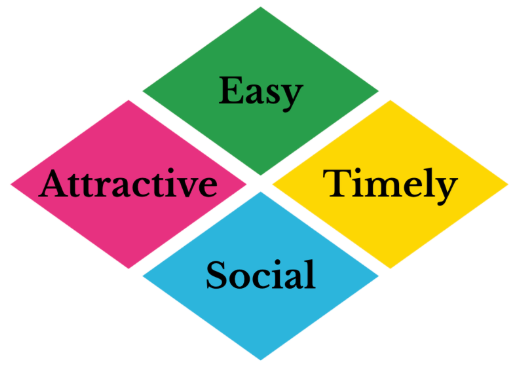
Let’s have a look at some more examples of how episode design encourages behaviour change, using the EAST framework as a guide.
Actions are made easy. Parenting episodes have simple takeaway actions, that any parent can put into practice. All play episode games can be played by parents, without training, and using household objects like stones, cups, or pieces of clothing. Or, in many cases, with no equipment at all – such as verbal communication games.
Change is made attractive. Parents have to see the benefits in making a change. While the primary assumption is that parents want to help their children be the best versions of themselves, it’s not the only factor that motivates parents. So, we also tap into social status drivers, such as the ability of children to get good jobs, be leaders in the community, and be better able to financially support the parents in their old age.
There’s also a social element to each episode. Not only is the fact that behaviours are normalised and discussed in episodes powerful in its own right, but the fact that episodes have relatable content, with stories and humour delivered by a local education official or kindergarten teacher, in the local language, helps the message to resonate. For example, when episodes are translated, the details of the stories and names of the characters are adapted to the region.
After each episode there’s a Q&A and phone-in with the radio host and a presenter. Usually between 5 and 10 listeners call in and share their experiences after each broadcast. That’s hundreds of parents speaking out on the radio across Ghana every month – contributing further to changing social norms and acceptability of behaviours.
Finally, episodes are timely. They’re broadcast at prime time when the whole family are at home together. That means that behaviours and games can be immediately put into practice, in situ.
This timing also means that fathers – as well as mothers – are listening. Surveys by Farm Radio in 12 Districts in Ghana suggest that there are slightly more male than female listeners: something we’ve seen reflected in the phone-ins.
How do radio episodes translate into real-life behaviours?
The evaluation by Farm Radio found that;
- Nearly all listeners (97%) agreed that the radio programme helped parents to support their preschool children to learn at home
- Similarly, there was almost universal recognition that they had seen positive changes in their children as a result of radio episodes (94%)
- Almost all listeners agreed that the LMT program had influenced their decision to start new practices (92%) – for example, more than 4 in 5 listeners noted they started encouraging children to use good hygiene practices (82%)
Some initial qualitative results from a soon-to-be-released RCT on Lively Minds programme and the Lively Minds Together radio programme found similar changes attributed to the radio show
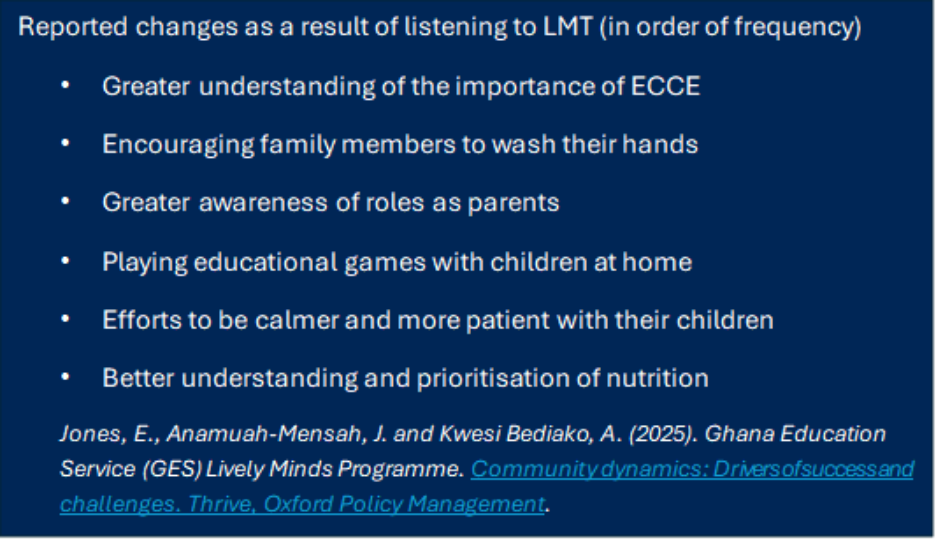
The story of Musah at the start of this blog is based on real accounts. And one of the big self-reported changes seems to be that parents are kinder and more patient with their children.
Here are some recent interviews with radio listeners:
The result: generational change
In summary, radio can change lives. It has the potential to be a powerful behaviour change tool.
It can change what happens inside homes. It can change the opportunities that children carry into school and into life. And it can do so at scale, with evidence behind it.
Even if the programme stopped tomorrow, the changes would remain. Parents now see themselves differently. Children are growing up differently. When those children become parents, they will raise their children differently too.
That’s generational change—thanks to radio.
Published November 2025
Why radio is *still* a powerful tool for change
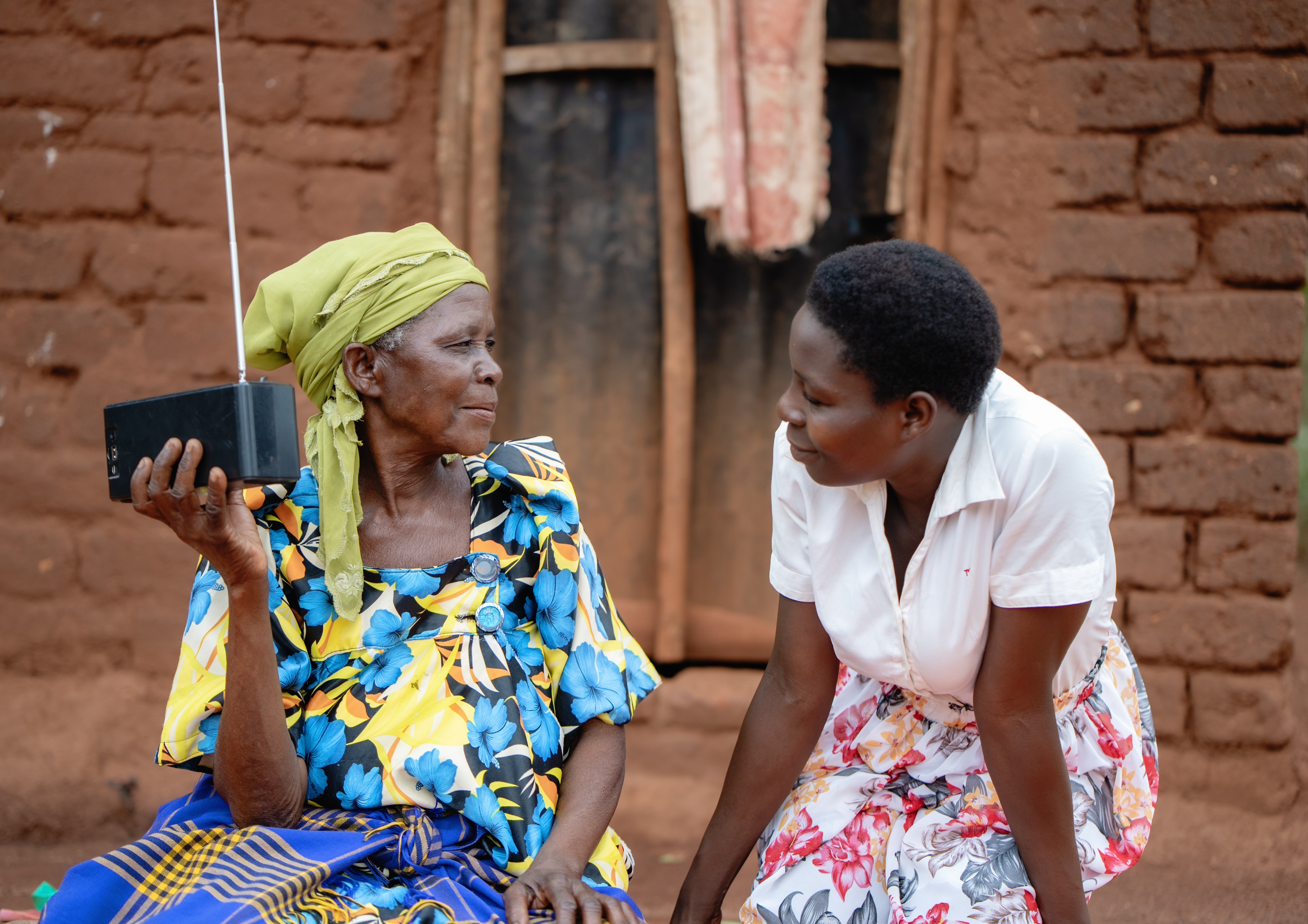
The Lively Minds Together (LMT) radio programme in Ghana shows that radio cuts through and makes an impact in areas where other media cannot.
LMT provides a powerful case study for radio use – not just in early childhood care and Education – but more broadly in changing behaviour in parts of the world where radio is still the most accessible, and most trusted form of media.
The ECCE challenge
Before looking at the radio is such an impactful media, let’s look at why a radio programme related to Early Childhood Care and Education (ECCE) is needed.
At least 350 million children globally do not receive adequate ECCE. This means that some aspects of their physical, cognitive, or social development is impaired. And this has lasting impacts on not just their ability to participate in school and education. With development in the first 8 years of a child’s life critical, this can affect their entire life prospects.
The lack of ECCE is more profound in rural areas. One of the barriers in rural areas is that many parents struggle to provide adequate ECCE at home. Parents might lack confidence or knowledge, or even the motivation to do anything differently. And so, children’s nutrition, hygiene, sleep, nurture, education, and care can suffer.
Kindergartens or pre-primary schools are not the silver bullet here. These schools face their own challenges including large class sizes, teacher absenteeism, and default to rote learning. And even where schools do exist, children will still spend around 75% of their time at home.
So, the core mission of Lively Minds is to solve the ECCE crisis and improve what’s called ‘school readiness’ of children aged 3-7, by unlocking the potential of parenting.
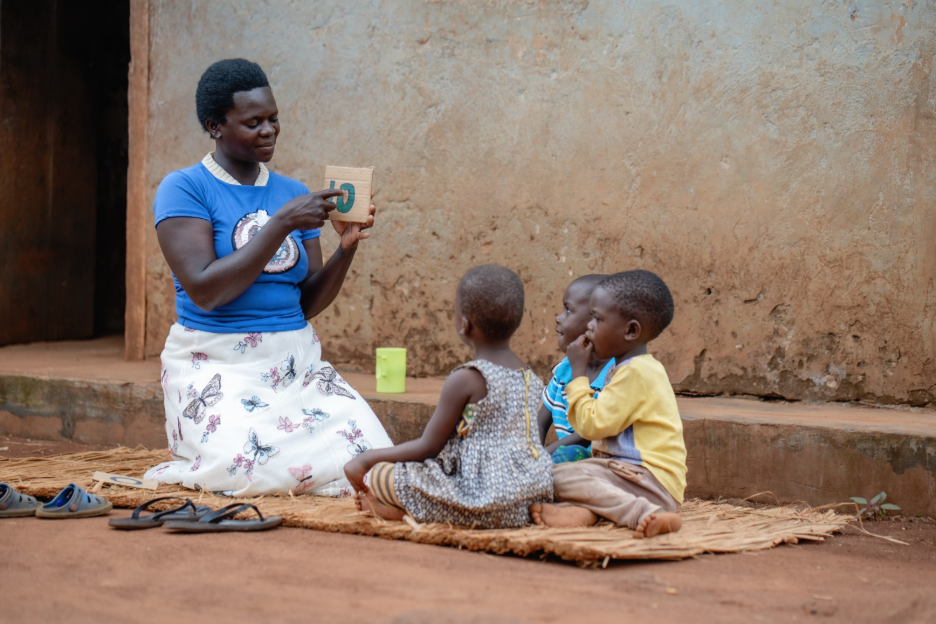
A mother in Uganda playing a number recognition game learnt through Lively Minds Together.
Lively Minds Together in Ghana
Lively Minds has been running a parenting and ECCE programme in Ghana for nearly 20 years. But when the Covid pandemic closed schools and restricted meetings in 2020, one solution was to create a radio show. The pilot radio show, initially patched together by Lively Minds team members, was named ‘Lively Minds Together’ (LMT) because it involves parents together with children.
Lively Minds Together has since grown in Ghana, in partnership with the Ghana Education Service (GES), and broadcasts two types of episodes that alternate: Parenting and Play episodes. The image below gives an idea of the content of these episodes.
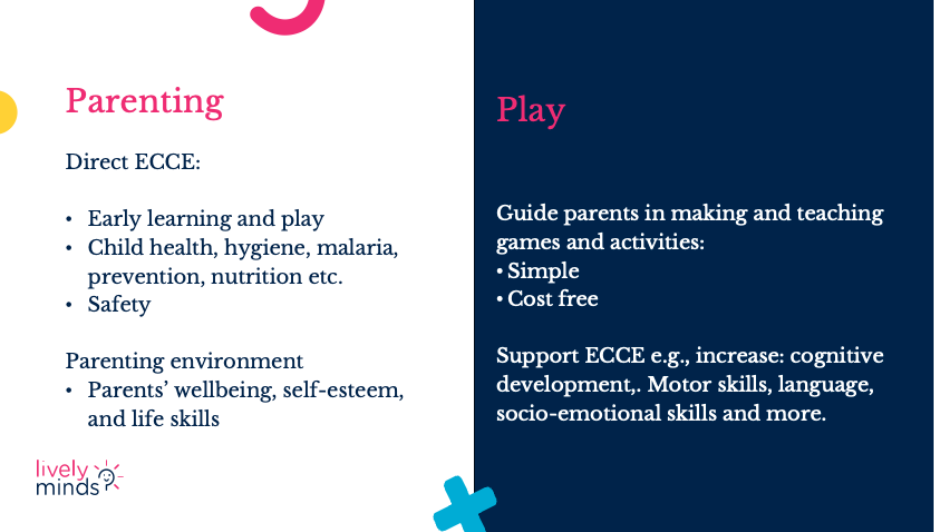
Episodes are translated into local languages and recorded by local GES kindergarten teachers. When episodes are aired, they’re followed by a live Q&A with the presenter and a phone-in so that parents can engage and share their experiences.
Why radio?
Why is it that this radio show has continued to grow, engage parents, and become an important vehicle for promoting ECCE in Ghana?
There are a few unique aspects of radio as a format that have contributed to this success.
1. Reach
Firstly, quite simply, radio reaches areas where other media doesn’t. Television in rural Ghana is patchy. While almost half of the rural population have a mobile phone of some sort (45%) – only around quarter of these are defined as smart phones. According to official statistics, internet access in rural localities across Ghana is only around 13%.
However, figures in Ghana suggest somewhere between 50% and 80% of households in rural areas have access to the radio.
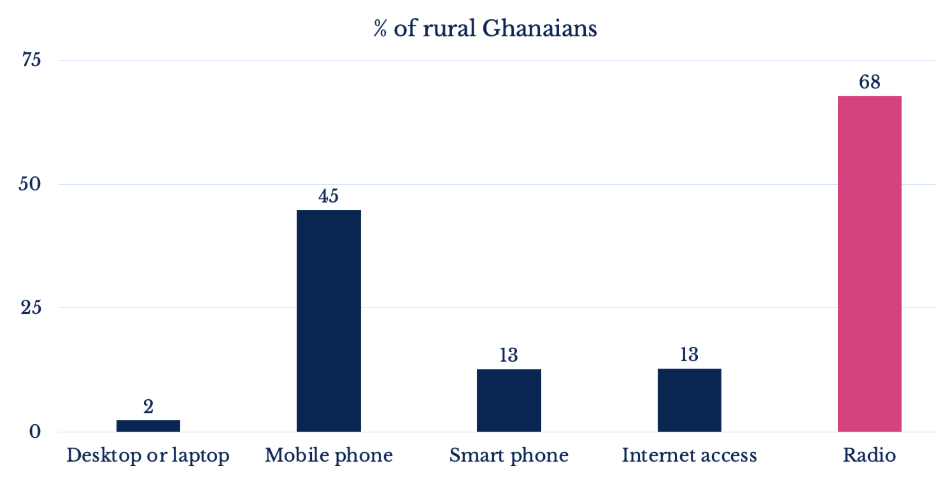
This ability to reach rural homes is critical. Broadcasts are getting to families in the hardest-to-reach areas, in the local language that they use day-to-day. This is simply not true of other media.
2. Both parents
Secondly, radio has the capacity to reach both parents. Episodes are deliberately broadcast during prime listening slots – even though this is more expensive – as this is when families are most likely to be together home and listening to the radio.
While many ECCE programmes lean quite heavily on mothers and female caregivers, evidence from an evaluation of LMT by Farm Radio shows that there are more male than female LMT listeners. This phenomenon is also seen in phone-ins, where there is a well-balanced mix of male and female callers week after week - sharing their experiences and gratitude for the show.
‘Taking turns playing games with the children is a sign of love in our house’ – father listener.
Fathers playing a game in Uganda.
3. Ability to scale up
Thirdly, radio has proved to be relatively cost effective to scale up. Reaching people in rural communities can be resource intensive – especially when travel is involved. However, with costs of recording and broadcasting radio programmes comparatively low compared to in-person interactions, Lively Minds Together has been able to scale up quickly, and there are now (as of 2025) 29 local stations in Ghana broadcasting LMT. Though it’s challenging to get accurate figures, there is an estimated reach up to 4 million listeners in 23 languages, and LMT has been aired for around 10,000 hours across all stations.
4. Trust
Finally, radio remains one of the most accessible and trusted sources of information. With LMT, parents hear information in their own language. Programmes are often delivered by familiar presenters and backed by the Ghana Education Service. Weekly broadcasts build routine and reliability. And in many communities, neighbours gather to listen together, which reinforces confidence and action.
For example, after a recent episode on the menopause (a process affecting half of every population) a female caller in and said, ‘Thank you for this education, this has been a worry to many women. Now I understand myself better.’
In a context where information is often in a different language, distant, or unreliable, radio remains a medium that parents instinctively trust.
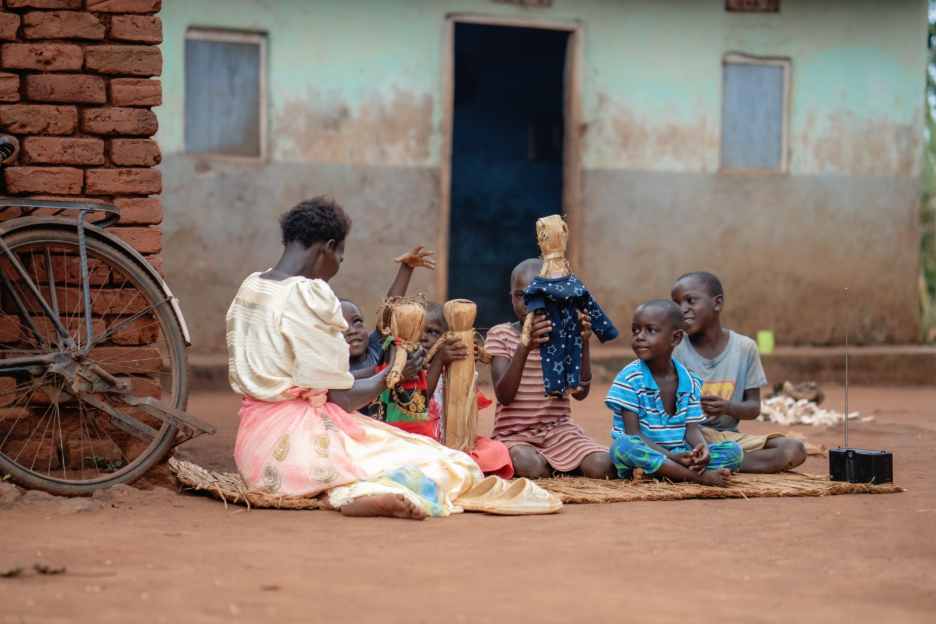
Story telling play!
Impact
Combining radio’s unique qualities, and the design of LMT to support behaviour change in rural parents [link to other blog], results in considerable and life-changing impact – at scale.
Recent research by Thrive, and Oxford Policy Management asked listeners what they had learned from LMT, and reported changes included having a greater understanding of the importance of ECCE, playing educational games with children at home, better understanding and prioritisation of nutrition, and efforts to be calmer and more patient with their children.
Perhaps the most important reported change was having ‘Greater awareness of roles as parents’, and one research participant admitted that ‘Before, we thought that teachers do all the teaching that is needed’ (male community member in a focus group).
Quotes from qualitative research by Farm Radio, show that another impact was that listeners were more likely to support their children to go to school.
‘My children used to go to school reluctantly and return at their convenient time. But now I ensure they go early and return at the appropriate time. I sometimes follow up when they delay too much.’ (female listener, Bunkpurugu-Nyankpanduri District)
The quotes in pink and dark blue in the image below, cover similar themes.
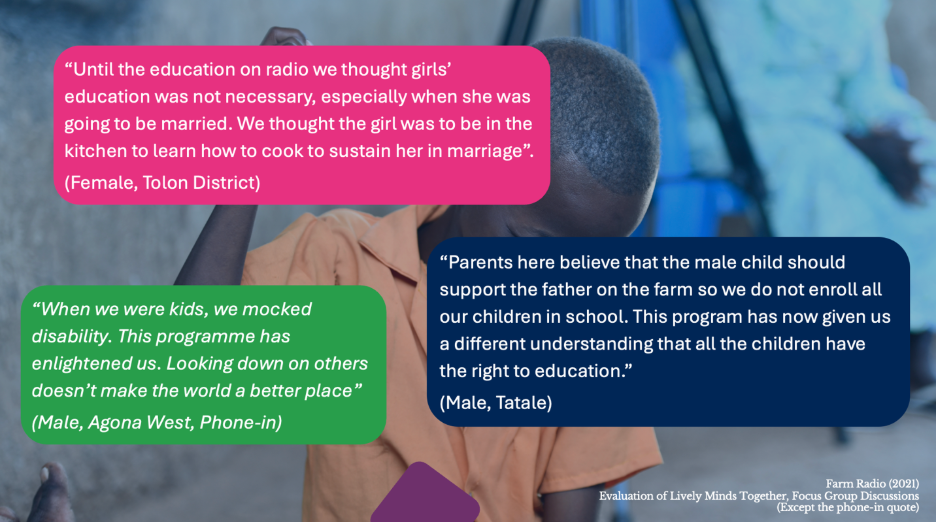
The quote in green is from a phone-in, and comes directly after listening to an LMT episode on disability – showing that attitudes can be changed, even by a single episode.
Radio is still powerful
Radio is a lifeline in rural areas that aren’t served by other types of media, it engages men and women, and it’s highly trusted by listeners.
It changes behaviours, builds parents’ confidence, and can shift the educational attainment and life prospects of children.
So while radio broadcasts have been around for over 100 years, Lively Minds Together is showing that it’s still as impactful as ever in 2026.
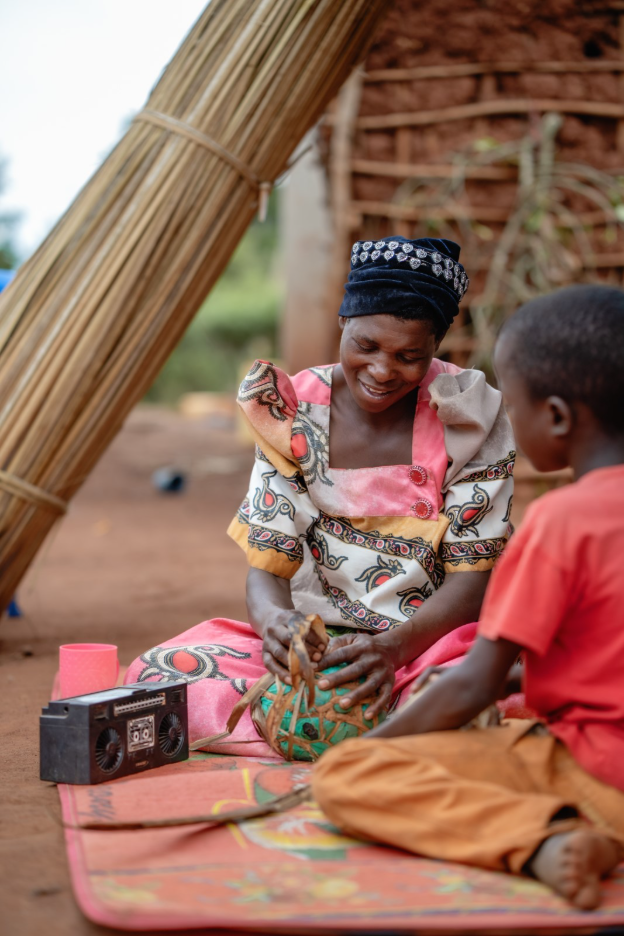
A mother creating a ball with her child after learning the technique from a Lively Minds Together broadcast.
Written by Geoff King
Published March 2026
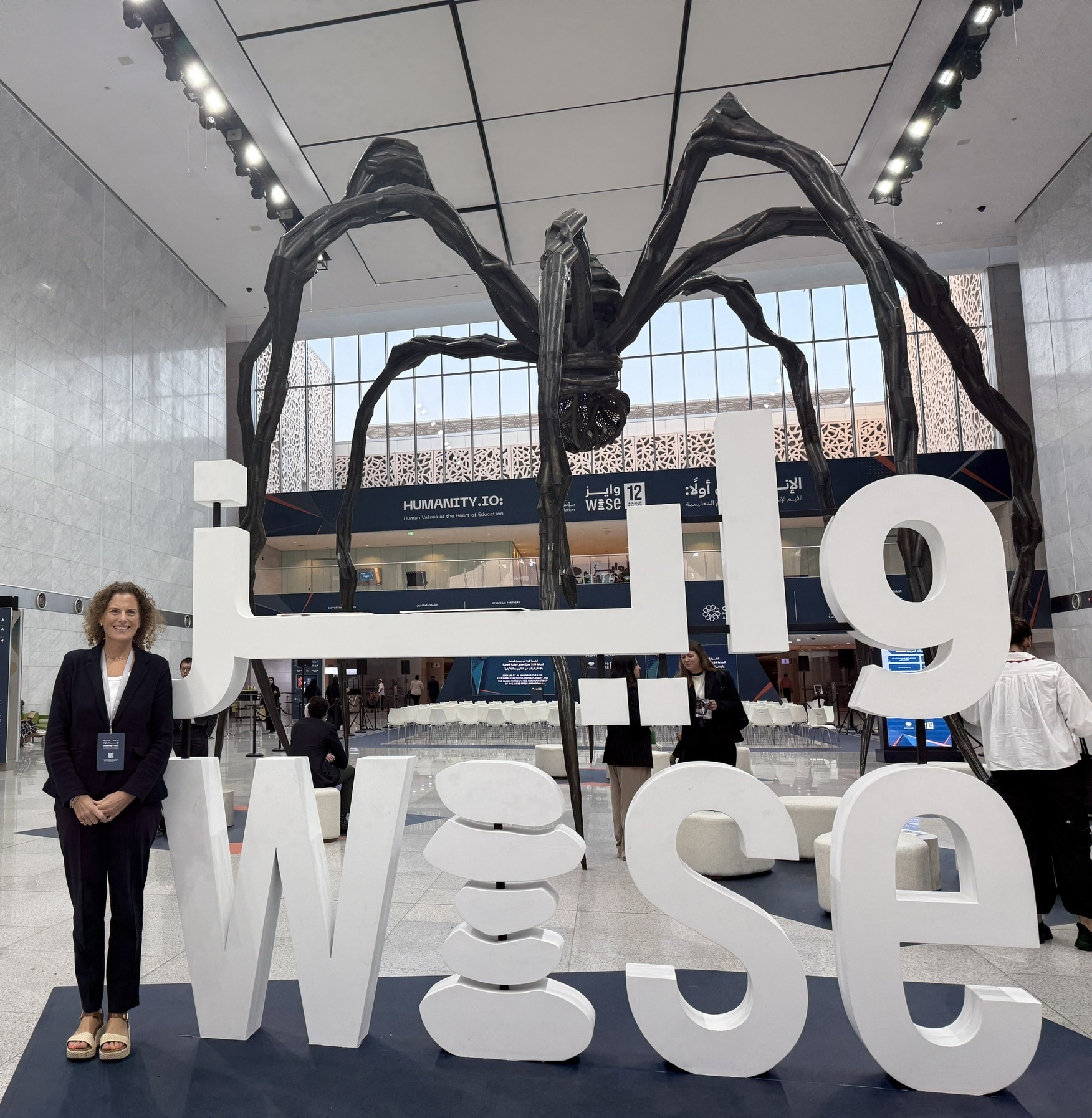
Reflections on WISE: Two Days of AI, Learning, and What Makes Us Human
The November World Innovation Summit for Education (WISE) flew by in a whirlwind of conversations, ideas, and debates about AI, innovation, and the future of learning. For our Lively Minds Advocacy Lead Eleanor Sykes, it was a fascinating and energising experience, highlighting the central role of early childhood development and parents even amidst discussions of the latest technologies.
AI was everywhere - from sessions exploring how it can support teachers and children, to debates on whether it can solve complex educational challenges. While there were incredible innovations showcased, including apps that analyse lessons to provide coaching at scale, it was clear that technology alone cannot replace humans.
As Dr Randa (Grob) Zakhary from Education.org said during the session ‘Transforming the Global Early Education Sector,',
‘As AI is growing, what makes us human is even more precious. There are things humans do that only humans can do and we must invest in these deeper.
She reminded us that the most important investment is in young children, whose brains are forming at an astonishing pace, with up to one million neural connections per second at age two, and whose self-regulation skills at age four predict how they will succeed at school and in life. With information like that, it is hard to understand why the campaign for more investment in early years is needed.
Other speakers reinforced similar messages. Cristóbal Cobo from The World Bank emphasised that AI should be seen as a questioning machine, not an answering machine, with the thinking always coming from the learner. Fernando Díaz del Castillo from Mentu reminded us that if the teacher or AI is doing the thinking, children are not learning.
For Lively Minds, these insights underline why our approach focuses on supporting parents in marginalised communities to provide quality early childhood development at home and in school. Participating in the parenting course transforms them into what we are now thinking of as a child’s personal ‘questioning machine,', encouraging reflection, curiosity, problem-solving, and resilience. While AI can ask questions and process information, it cannot build the human connections, empathy, and understanding that parents provide—and every child has a parent or caregiver who can fulfill this role.
Throughout the conference, it was impossible to ignore the recurring truth: while technology and AI offer exciting possibilities, real educational transformation begins with human connection. Parents, teachers, and early childhood practitioners remain the most critical resources for children’s learning and development. The discussions at WISE reinforced that early years and parental engagement need to be more firmly positioned at the heart of all education conversations.
Two days of rich dialogue, thought-provoking questions, and inspiring ideas through the sessions and conversations during WISE reaffirmed what we already know: investing in young children, supporting parents, and nurturing human connections are the foundation for a better future. Amidst all the talk of AI, that simple truth remains at the heart of what we do.
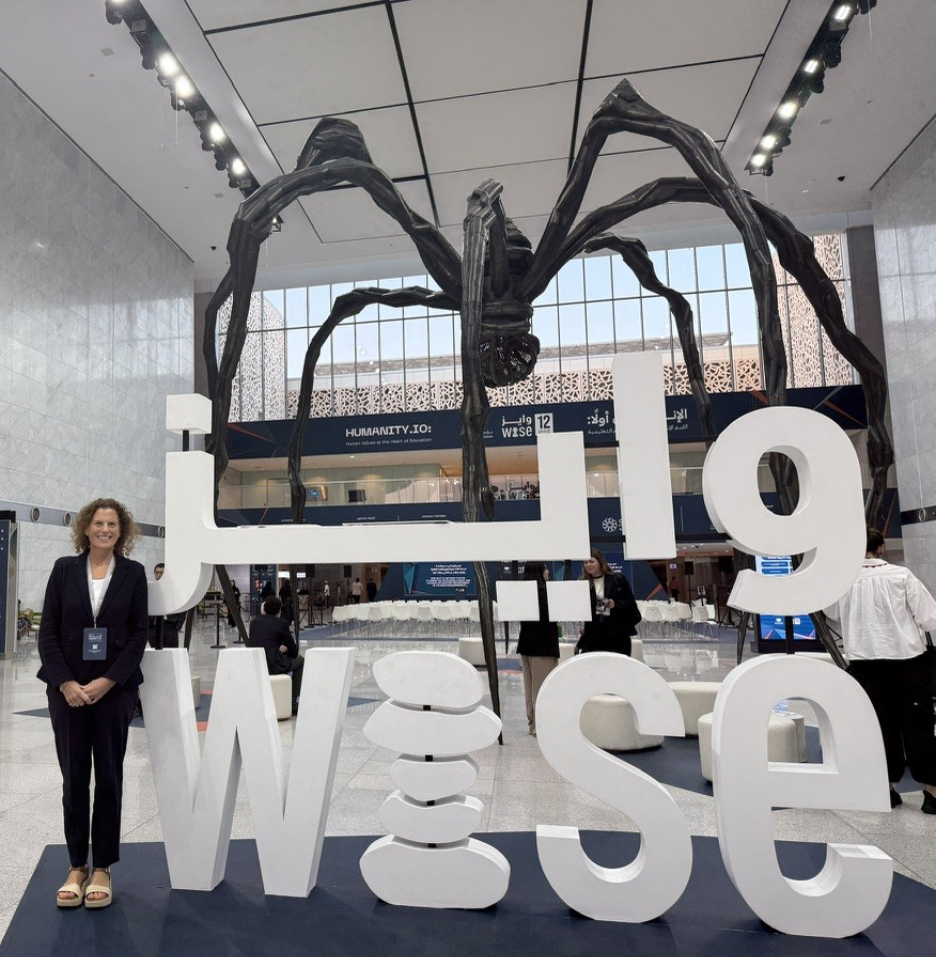
Our Advocacy Lead Eleanor Sykes: "Under the spider—the place to meet at the conference!
Published December 2025
.png)